
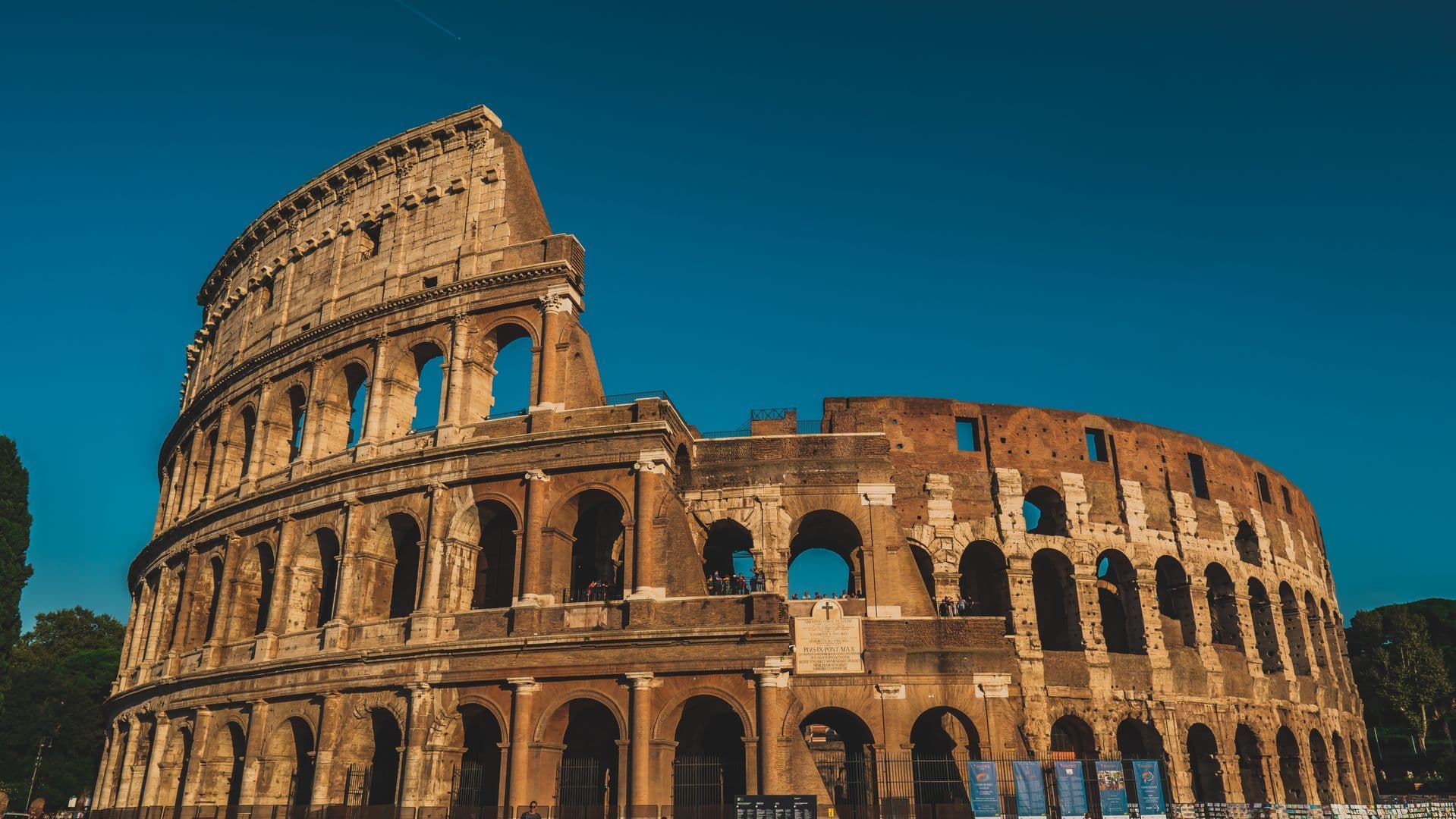
Rome
Rome is one of those cities that earns every superlative thrown at it. Nearly 3,000 years of continuous history are stacked on top of each other here: Roman temples turned into churches, medieval churches built on ancient bath houses, Renaissance palaces overlooking forums where Julius Caesar walked. The Colosseum. The Vatican. The Pantheon. The Trevi Fountain. The Spanish Steps. Rome's list of unmissable sites is longer than most cities' entire tourist offering.
For Muslim travellers, Rome requires some planning but rewards it handsomely. Italy has approximately 2.5 million Muslim residents, and Rome, as the capital, has a significant and well-established Muslim community. The Grande Moschea di Roma, built in 1995, is the largest mosque in Western Europe by capacity, an architectural statement of Islamic presence in the Eternal City. The halal food scene, while not as comprehensive as London or Paris, has grown substantially in the past decade, concentrated in specific neighbourhoods that are also interesting to visit in their own right.
Rome is also a city of extraordinary Islamic historical connection that most visitors never think about. Sicily, the island south of the Italian mainland, was under Arab Muslim rule for over 200 years (827–1072 CE), and the architectural and cultural influence of that period is visible throughout southern Italy. The Norman palaces of Palermo show Islamic design. Arabic words remain embedded in the Sicilian dialect. Visiting Rome and understanding this context adds a layer to the experience that enriches everything.
Rome is best divided into manageable neighbourhood days rather than landmark-to-landmark sprints. The ancient historic centre (Colosseum, Roman Forum, Palatine Hill) deserves a full day, but buy combined tickets online at least 2 weeks in advance to avoid the queues, which in peak season are genuinely punishing. The Vatican (St Peter's Basilica, the Vatican Museums, the Sistine Chapel) is another full day — again, pre-book online. Early-morning entry (the first slot of the day) is significantly less crowded.
The neighbourhood of Trastevere, a tangle of cobbled lanes, ochre buildings, and excellent restaurants across the Tiber from the main centre, is the most atmospheric area for an evening wander. Piazza Navona and the Pantheon area are beautiful at any time of day, but magical in the evening when the tourist day-trippers have left. The Prati neighbourhood (across from Castel Sant'Angelo) is calmer, more residential, and has good halal food options, making it an ideal base for Muslim visitors.
Transport: Rome's metro has only two main lines (A and B) and only partially covers the major sites. Buses fill the gaps but can be confusing. Walking is genuinely the best way to experience central Rome; most major sites within the centre are 15–30 minutes on foot from each other, and the streets between them are themselves worth exploring. The Roma Pass gives unlimited transport and one or two free museum entries and is worth calculating for your specific itinerary.
Why Muslims Love This Destination
- Several mosques, Islamic centers, and prayer facilities are available throughout Rome, serving both residents and visitors.
- A growing number of halal restaurants offering Middle Eastern, Turkish, South Asian, and North African cuisine.
- Rich history, world-famous landmarks, and cultural experiences that make every visit memorable.
- Family-friendly attractions, museums, parks, and walking tours suitable for all ages.
- Diverse and multicultural environment with a welcoming international community.
Advertisement Space
destination-content • banner • Min: 320pxRome's halal food scene is concentrated in specific areas — particularly Prati (near the Vatican), Torpignattara, and the Esquilino district around Termini station, which has a significant South Asian and North African community. Al Hana Restaurant in Prati is one of Rome's most established halal restaurants, serving Moroccan and Mediterranean food near the Vatican — excellent after visiting St Peter's Basilica. The Esquilino market area near Termini has multiple halal butchers, South Asian grocery stores, and affordable halal restaurants. Rome's greatest food traditions are inherently meat-flexible: several halal-certified pizzerias and trattorias exist, and the city's extraordinary vegetarian options (cacio e pepe, focaccia, supplì rice balls) are naturally halal, as is gelato (try Giolitti near the Pantheon, since 1900). Note: many classic pasta dishes use guanciale (cured pork cheek), particularly carbonara and amatriciana — ask restaurants to substitute with chicken, or opt for the city's excellent seafood and pizza instead.
Grande Moschea di Roma in the Parioli district is the largest mosque in Western Europe, built in 1995 with a vast prayer hall lit by natural light through a star-and-crescent dome. It welcomes Muslim visitors, and Friday prayers draw very large congregations. Take Metro A to Euclide. The attached Islamic Cultural Centre of Italy has a library and exhibition space. Masjid Bilal in Torpignattara serves Rome's working Muslim community in one of the city's most multicultural neighbourhoods. Rome Fiumicino Airport (FCO) has a multi-faith prayer room in Terminal 3. Ask staff for the "sala preghiera multifede."
Muslim Travel Tips
- Use apps like Muslim Pro or HalalTrip to locate nearby mosques, prayer facilities, and halal restaurants.
- Plan prayer times in advance when visiting major attractions such as the Colosseum, Vatican area, or Roman Forum.
- Rome's metro, buses, and trams are convenient for getting around, but expect crowds during peak tourist seasons.
- Look for halal-certified restaurants or opt for vegetarian and seafood dishes when halal options are limited.
- Dress modestly when visiting religious sites, churches, and historical landmarks out of respect for local customs.
April to June and September to October are perfect: warm (18–27°C), manageable crowds compared to summer, and extraordinary light on the ancient monuments. Avoid July and August: Rome in high summer is 32–38°C, ferociously crowded, with Colosseum and Vatican queues reaching 2–3 hours without pre-booking. Winter (November to March) is quiet, often beautiful, with lower prices.
Plan Your Trip
Book Flights, Hotels & Activities
Everything you need to book your trip to Rome in one place.
Rome is one of those cities that earns every superlative thrown at it. Nearly 3,000 years of continuous history are stacked on top of each other here — Roman temples turned into churches, medieval churches built on ancient bath houses, Renaissance palaces overlooking forums where Julius Caesar walked. The Colosseum, the Vatican, the Pantheon, the Trevi Fountain — Rome's list of unmissable sites is longer than most cities' entire tourist offering.
For Muslim travellers, Rome requires some planning but rewards it handsomely. Italy has approximately 2.5 million Muslim residents, and the Grande Moschea di Roma, built in 1995, is an architectural statement of Islamic presence in the Eternal City. Rome is also a city of extraordinary Islamic historical connection. Sicily was under Arab Muslim rule for over 200 years (827–1072 CE), and that influence remains visible throughout southern Italy.
Planning Your Days
Rome is best divided into manageable neighbourhood days rather than landmark-to-landmark sprints. The ancient historic centre (Colosseum, Roman Forum, Palatine Hill) deserves a full day with combined tickets online at least 2 weeks in advance. The Vatican (St Peter's Basilica, the Vatican Museums, the Sistine Chapel) is another full day; early morning entry is significantly less crowded.
The Prati neighbourhood, across from Castel Sant'Angelo, is calmer, more residential, and has good halal food options, making it an ideal base for Muslim visitors. Trastevere, across the Tiber, is the most atmospheric area for an evening wander.
Advertisement Space
destination-sidebar • rectangle • Min: 300pxCountry
Italy
Visa Requirements
Schengen visa required for most; visa-free for some nationalities
Currency
Euro (EUR)
Time Zone
Central European Time (CET), UTC+1 Central European Summer Time (CEST), UTC+2 during daylight saving time.
Muslim Population
~4% (~2.5 million)
Main Language
Italian
Dress Code
MODEST DRESS: Normal
Safety Level
High – Rome is generally safe for tourists. Visitors should take normal precautions against pickpocketing in crowded tourist areas, public transport, and major attractions.
✈️ Search Flights to Rome
Compare 100+ airlines
Powered by Aviasales via Travelpayouts
🏨 Hotels in Rome
Compare 2M+ hotels worldwide
Powered by Hotellook via Travelpayouts
Prayer Times
Loading timings...
Explore More Destinations
Discover other Muslim-friendly destinations around the world.
View All Destinations