
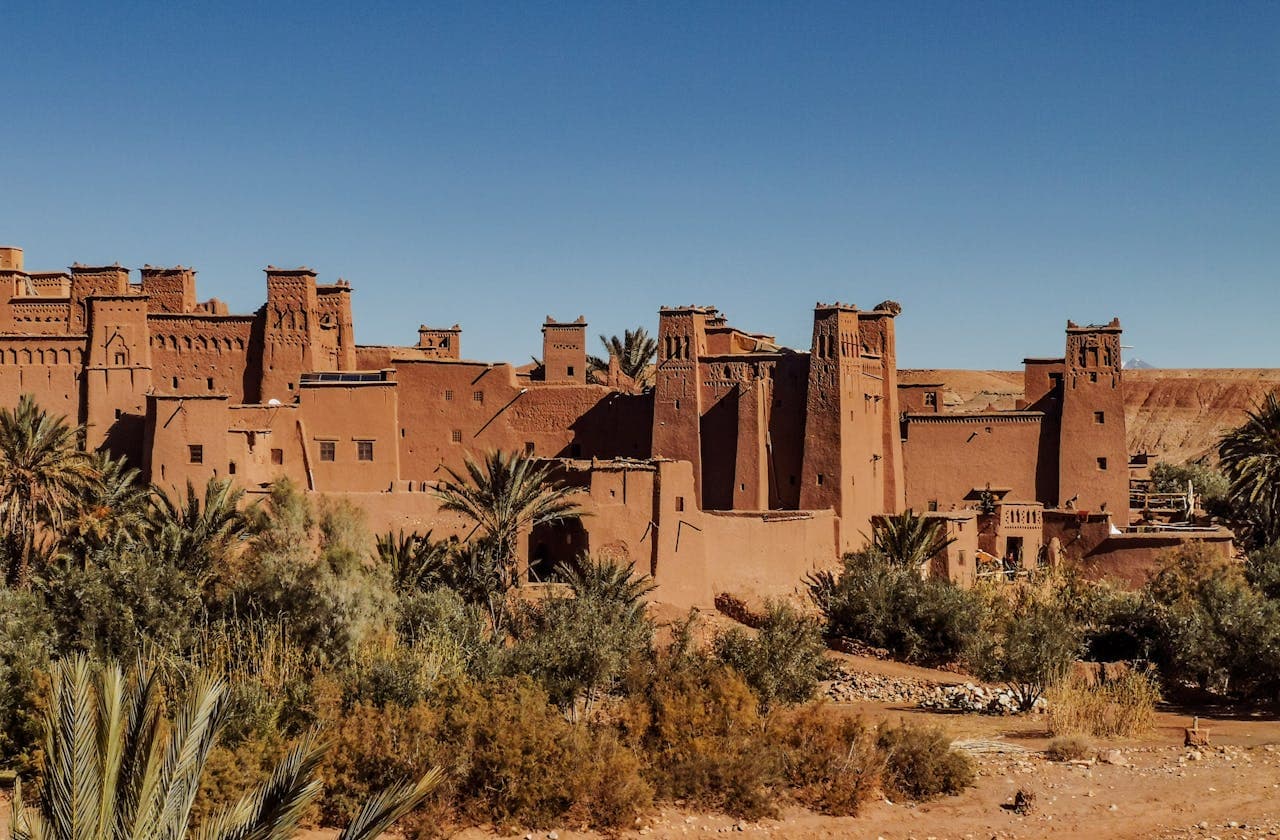
Marrakech
Marrakech is one of Africa's most extraordinary cities, a riot of colour, sound, scent, and history that overwhelms the senses in entirely wonderful ways. The medina (old walled city) is a UNESCO World Heritage Site and one of the world's great urban labyrinths: hundreds of narrow lanes lined with souks selling spices, leather, ceramics, textiles, and lanterns, all converging eventually on the Djemaa el-Fna, a central square that transforms each evening into one of the most extraordinary open-air spectacles on earth.
Morocco is a Muslim-majority country (99%), so halal food is universal, and prayer facilities are everywhere. The Islamic identity of Marrakech is felt in its architecture, the minarets, the intricate tilework of its mosques and riads, and the call to prayer that hangs over the city as much as in its daily life. It is a deeply comfortable Muslim city.
The medina is where you should spend the majority of your time. The main souks, organised loosely by trade, so you move from metalworkers to leatherworkers to spice sellers, are extraordinary to walk through even if you buy nothing. The Bahia Palace and Badi Palace give architectural context. The Saadian Tombs (rediscovered in 1917 after centuries of being sealed off) are among the great historic sites in North Africa.
A day trip to the Atlas Mountains (90 minutes from Marrakech) offers an extraordinary contrast, particularly the village of Imlil as a base. The drive through the foothills alone is worth the journey.
For solo female Muslim travellers, Marrakech is the Moroccan city that generates the most reports of street harassment, particularly around the Djemaa el-Fna. Walking with purpose, dressing modestly, and knowing where you're going significantly reduce this. Most experiences are unpleasant rather than unsafe.
Why Muslims Love This Destination
- Morocco is a Muslim-majority country, so halal food is universal and requires no special searching.
- Stunning Islamic architecture throughout the medina, including the iconic Koutoubia Mosque minaret.
- Rich Islamic heritage and centuries of history visible in every corner of the old city.
- A deeply spiritual atmosphere with the call to prayer audible across the entire city five times daily.
- Affordable luxury — riads, spas, and fine dining are accessible at a fraction of European prices.
Advertisement Space
destination-content • banner • Min: 320pxEverything in Marrakech is halal. Morocco is a Muslim-majority country, and alcohol is restricted to licensed tourist establishments, easily avoided. Must-try dishes: tagine (slow-cooked meat and vegetable stew, best at simple medina restaurants away from the touristy Djemaa el-Fna stalls), couscous (traditionally served Fridays, with seven vegetables and lamb or chicken), harira (thick tomato and lentil soup, the classic Ramadan iftar starter, available year-round), merguez (spiced lamb sausage grilled over charcoal), bastilla (extraordinary sweet-savoury pigeon or chicken pie with almonds and cinnamon in pastry), and Moroccan mint tea, which comes with everything and should be accepted everywhere. Street food at Djemaa el-Fna (snail soup, fresh orange juice, grilled meats) is busy and touristy but genuinely good. For the most authentic experience, head to the souk restaurants around Rue Bab Agnaou.
Koutoubia Mosque is the most important mosque in Marrakech; its iconic minaret is visible across the city. Non-Muslims cannot enter (standard across Morocco), but the gardens around it are beautiful, and the call to prayer is extraordinary. Ben Youssef Mosque is a historic mosque in the medina. Numerous neighbourhood mosques are spread throughout the medina and Gueliz (new town). Prayer times are posted at all mosque entrances and followed throughout the city; you'll never be far from the call to prayer in Marrakech.
Muslim Travel Tips
- Use apps like Muslim Pro or HalalTrip to locate nearby mosques, prayer facilities, and halal restaurants.
- Plan prayer times around your medina exploration many mosques are not open to non-Muslim visitors, but the call to prayer is audible everywhere.
- Negotiate prices in the souks bargaining is expected and part of the culture.
- Dress modestly throughout the city, especially in the medina and near mosques, out of respect for local customs.
- Solo travellers, especially women, should walk with purpose and avoid quiet medina alleys after dark.
March to May and October to November are ideal, warm, and dry without the extreme heat. Marrakech summers (June to August) are genuinely intense, regularly 38–45°C, and not comfortable for sightseeing. Winter (December to February) can be cool, especially at night, but generally pleasant during the day with clear skies.
Plan Your Trip
Book Flights, Hotels & Activities
Everything you need to book your trip to Marrakech in one place.
Marrakech is one of Africa's most extraordinary cities, a riot of color, sound, scent, and history that overwhelms the senses in entirely wonderful ways. The medina (old walled city) is a UNESCO World Heritage Site and one of the world's great urban labyrinths: hundreds of narrow lanes lined with souks selling spices, leather, ceramics, textiles, and lanterns, all converging eventually on the Djemaa el-Fna, a central square that transforms each evening into one of the most extraordinary open-air spectacles on earth.
Morocco is a Muslim-majority country (99%), so halal food is universal, and prayer facilities are everywhere. The Islamic identity of Marrakech is felt in its architecture, the minarets, the intricate tilework of its mosques and riads, and the call to prayer that hangs over the city as much as in its daily life. It is a deeply comfortable Muslim city.
Exploring the Medina
The medina is where you should spend the majority of your time. The main souks, organised loosely by trade, so you move from metalworkers to leatherworkers to spice sellers, are extraordinary to walk through even if you buy nothing. The Bahia Palace and Badi Palace give architectural context. The Saadian Tombs (rediscovered in 1917 after centuries of being sealed off) are among the great historic sites in North Africa.
A day trip to the Atlas Mountains (90 minutes from Marrakech) offers an extraordinary contrast, particularly the village of Imlil as a base. The drive through the foothills alone is worth the journey.
A Note for Solo Female Travellers
Marrakech is the Moroccan city that generates the most reports of street harassment, particularly around the Djemaa el-Fna. Walking with purpose, dressing modestly, and knowing where you're going significantly reduce this. Most experiences are unpleasant rather than unsafe. Don't let it keep you from going.
Advertisement Space
destination-sidebar • rectangle • Min: 300pxCountry
Morocco
Visa Requirements
Visa-free for UAE residents and many nationalities (90 days)
Currency
Moroccan Dirham (MAD)
Time Zone
Western European Time (WET), UTC+0; UTC+1 during daylight saving
Muslim Population
~99%
Main Language
Arabic, Berber (Tamazight); French widely spoken
Dress Code
MODEST DRESS: Strongly recommended and widely practised
Safety Level
Generally safe for tourists. Visitors should take normal precautions against pickpocketing and overly persistent vendors in the medina, and be aware of street harassment reports, particularly for solo female travellers around Djemaa el-Fna.
✈️ Search Flights to Marrakech
Compare 100+ airlines
Powered by Aviasales via Travelpayouts
🏨 Hotels in Marrakech
Compare 2M+ hotels worldwide
Powered by Hotellook via Travelpayouts
Prayer Times
Loading timings...
Explore More Destinations
Discover other Muslim-friendly destinations around the world.
View All Destinations