
Delhi
Delhi is one of the world's great cities of Islamic history. The Mughal Empire made Delhi its capital, and the architectural legacy of that era is still breathtakingly visible across the city. The Red Fort, built by Shah Jahan in 1648, is a red sandstone citadel of extraordinary scale, and Jama Masjid, also built by Shah Jahan, is the largest mosque in India.
India has approximately 200 million Muslim citizens, the world's third-largest Muslim population, and Delhi's Muslim community, concentrated in the walled Old City (Shahjahanabad), has maintained traditions of Mughal-era craft, cuisine, and religious practice that are genuinely extraordinary to encounter.
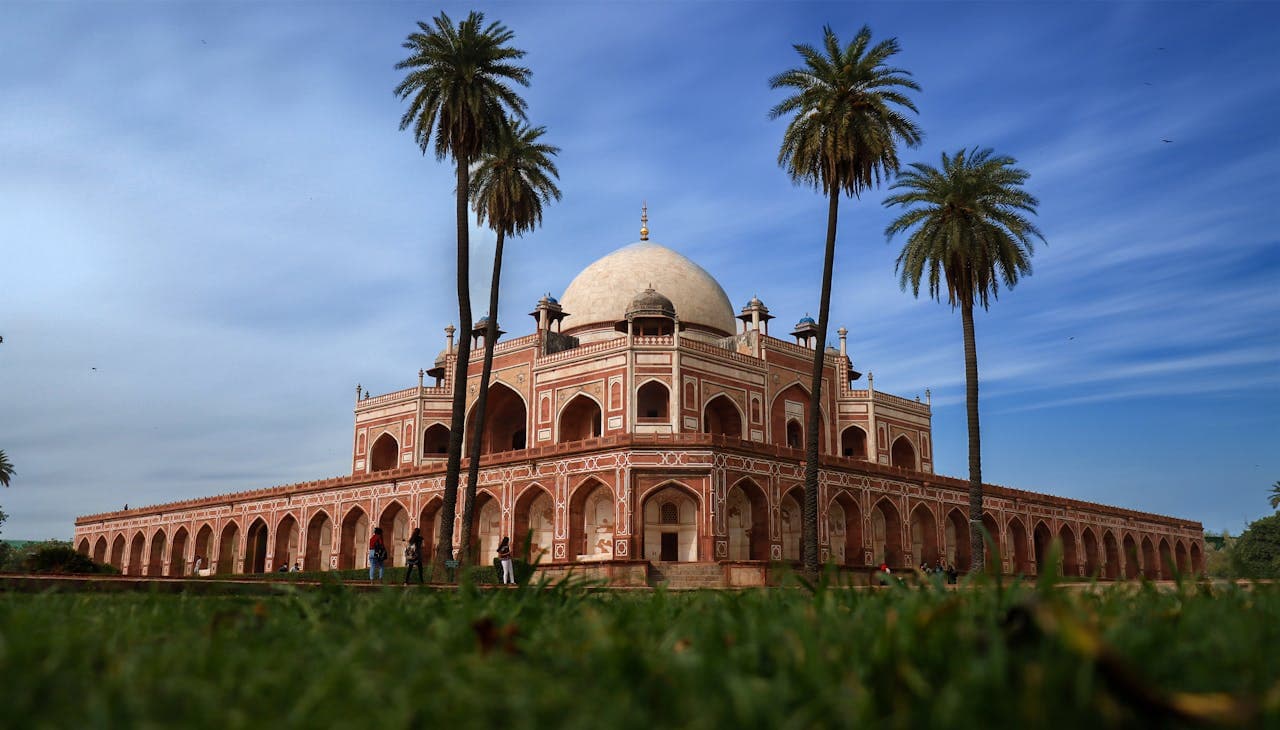
Old Delhi, the Shahjahanabad walled city, contains Jama Masjid, the Red Fort, and the extraordinary labyrinth of Chandni Chowk. Spend a full day here at minimum, walking from Jama Masjid through the food lanes into Chandni Chowk's chaos and out through the spice market of Khari Baoli. New Delhi's Humayun's Tomb, the architectural predecessor of the Taj Mahal, is a UNESCO World Heritage Site, often less crowded than the Taj and equally moving.
Day trip to Agra: the Taj Mahal (2.5 hours from Delhi by Gatimaan Express train) is mandatory for any visitor to India. Built 1631–1648 by Shah Jahan as a mausoleum for his wife Mumtaz Mahal, it is one of the most significant Islamic buildings in the world. Buy tickets online in advance and visit at dawn for the best light and fewest crowds.
Getting around Delhi: the Delhi Metro is extensive, clean, air-conditioned, and connects all major tourist sites. Uber and Ola work well for areas not served by Metro.
Why Muslims Love This Destination
- Home to Jama Masjid, India's largest mosque, with a courtyard that holds 25,000 worshippers.
- Extraordinary living Mughal food heritage — nihari, kebabs, and biryani refined over centuries.
- The Hazrat Nizamuddin Dargah offers a deeply spiritual Sufi experience with weekly qawwali performances.
- Easy access to the Taj Mahal, one of the most significant Islamic buildings in the world.
- A large, established Muslim community with mosques, halal food, and Islamic heritage throughout the city.
Advertisement Space
destination-content • banner • Min: 320pxDelhi's halal food tradition is one of the oldest and most refined in the world, rooted in Mughal court cuisine. Karim's (Gali Kababian, Old Delhi) is the most famous Muslim restaurant in India, opened in 1913 by a descendant of Mughal royal chefs mutton burra kebab, nihari, and seekh kebab of extraordinary quality. Al Jawahar (Matia Mahal, opposite Jama Masjid) has served slow-cooked overnight nihari with naan since 1947. Eating it while watching the mosque's minarets in the morning light is unforgettable. The lanes around Jama Masjid (Gali Paranthe Wali, Matia Mahal, Urdu Bazaar) form Delhi's Muslim food district, entirely halal, including Paranthe Wali Gali, a lane dedicated to stuffed fried flatbread. Old Delhi's biryani, more subtly spiced than Hyderabadi style, with whole spices and tender meat, is sold by multiple restaurants near Jama Masjid. Beyond Old Delhi, halal food is widely available in Nizamuddin, Okhla, and Jamia Nagar.
Jama Masjid in Old Delhi is India's largest mosque, built 1644–1656 by Shah Jahan, with a courtyard holding 25,000 worshippers and a south minaret you can climb for extraordinary views across Old Delhi. Hazrat Nizamuddin Dargah is the shrine of the Sufi saint Hazrat Nizamuddin Auliya (1238–1325), where qawwali devotional music is performed every Thursday evening after Maghrib, a profoundly moving experience. Fatehpuri Masjid at the western end of Chandni Chowk is a beautiful 17th-century mosque, quieter than Jama Masjid for daily prayers. Indira Gandhi International Airport (DEL) has prayer rooms in Terminal 3. Nizamuddin, Okhla, and Jamia Nagar have dense mosque coverage given their large Muslim populations.
Muslim Travel Tips
- Use apps like Muslim Pro or HalalTrip to locate nearby mosques, prayer facilities, and halal restaurants.
- Visit Old Delhi's food lanes (Matia Mahal, Gali Paranthe Wali) for some of the best Mughlai halal food in the world.
- Avoid visiting April to June due to extreme heat; October to March is far more comfortable for sightseeing.
- Book Taj Mahal tickets online in advance and visit at dawn to avoid crowds and heat.
- Dress modestly, especially around Jama Masjid and other religious sites.
October to March is the only comfortable time for outdoor sightseeing. October and November are warm and dry (25–33°C). December to February can be genuinely cold (5–15°C at night in January, with fog that can delay flights) — bring layers. Strictly avoid April to June: Delhi's pre-monsoon summer regularly reaches 43–48°C, making outdoor sites essentially unvisitable in peak afternoon heat.
Plan Your Trip
Book Flights, Hotels & Activities
Everything you need to book your trip to Delhi in one place.
Delhi is one of the world's great cities of Islamic history. The Mughal Empire made Delhi its capital, and the architectural legacy of that era is still breathtakingly visible across the city — the Red Fort, built by Shah Jahan in 1648, is a red sandstone citadel of extraordinary scale, and Jama Masjid, also built by Shah Jahan, is the largest mosque in India.
India has approximately 200 million Muslim citizens — the world's third-largest Muslim population — and Delhi's Muslim community, concentrated in the walled Old City (Shahjahanabad), has maintained traditions of Mughal-era craft, cuisine, and religious practice that are genuinely extraordinary to encounter.
Old Delhi vs New Delhi
Old Delhi — the Shahjahanabad walled city — contains Jama Masjid, the Red Fort, and the extraordinary labyrinth of Chandni Chowk. Spend a full day here at minimum, walking from Jama Masjid through the food lanes into Chandni Chowk's chaos and out through the spice market of Khari Baoli. New Delhi's Humayun's Tomb — the architectural predecessor of the Taj Mahal — is a UNESCO World Heritage Site, often less crowded than the Taj and equally moving.
Day Trip to Agra
The Taj Mahal (2.5 hours from Delhi by Gatimaan Express train) is mandatory for any visitor to India. Built 1631–1648 by Shah Jahan as a mausoleum for his wife Mumtaz Mahal, it is one of the most significant Islamic buildings in the world. Buy tickets online in advance and visit at dawn for the best light and fewest crowds.
Advertisement Space
destination-sidebar • rectangle • Min: 300pxCountry
India
Visa Requirements
e-Visa available online (USD 25–80 depending on type)
Currency
Indian Rupee (INR)
Time Zone
Indian Standard Time (IST), UTC+5:30
Muslim Population
~13% of Delhi; ~14% of India (~200 million)
Main Language
Hindi, Urdu, English widely spoken
Dress Code
MODEST DRESS: Widely respected, especially in Old Delhi and near mosques
Safety Level
Generally safe for tourists in main areas. Visitors should take normal precautions against pickpocketing in crowded markets and use registered taxis or ride-hailing apps at night.
✈️ Search Flights to Delhi
Compare 100+ airlines
Powered by Aviasales via Travelpayouts
🏨 Hotels in Delhi
Compare 2M+ hotels worldwide
Powered by Hotellook via Travelpayouts
Prayer Times
Loading timings...
Explore More Destinations
Discover other Muslim-friendly destinations around the world.
View All Destinations