
Bangkok
Bangkok is one of the great cities of Southeast Asia and one of the most visited cities in the world. Thailand's capital is a city of extraordinary contrasts: ancient temples standing beside glass skyscrapers, street food stalls operating in the shadow of luxury hotels, canal boats navigating waterways that have served the city for centuries. For Muslim travellers, Bangkok requires more research than a Muslim-majority destination but rewards that research generously. Thailand has a significant Muslim minority of approximately 4 to 5 million people, with the majority concentrated in the southern provinces but with a substantial and established community in Bangkok itself.
The Haroon Mosque area in Bang Rak, the Muslim community of Bang Lamphu near Khao San Road, and the Thai-Muslim neighbourhoods in the Bang Rak and Silom districts provide the most concentrated halal food infrastructure in central Bangkok. Beyond these, halal food is more widely available than visitors often expect — Bangkok's huge appetite for Middle Eastern and South Asian tourists has driven a significant expansion of halal-certified restaurants and hotels across the city over the past decade.
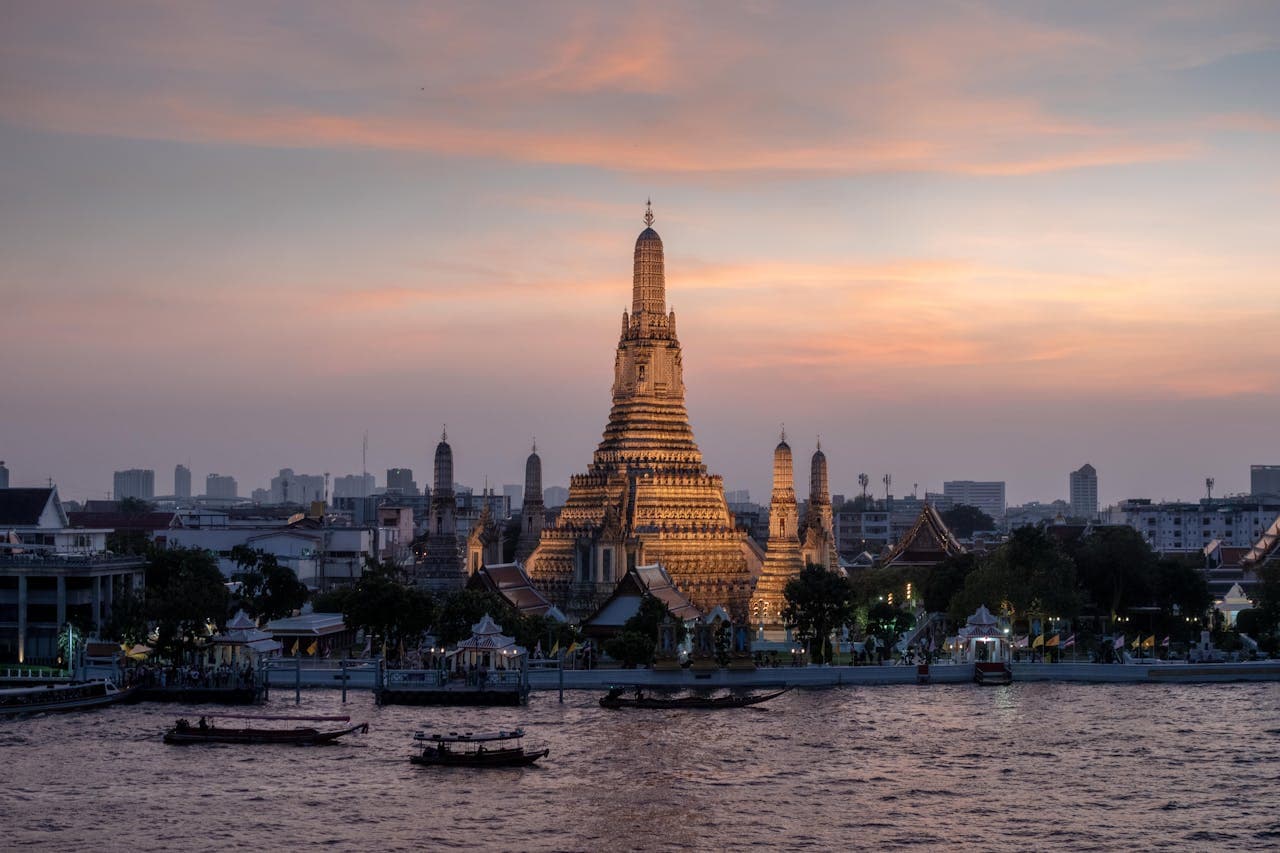
Bangkok divides naturally into several distinct experiential zones. The old city of Rattanakosin Island contains the Grand Palace, Wat Phra Kaew (Temple of the Emerald Buddha), Wat Pho (Temple of the Reclining Buddha), and Wat Arun (Temple of Dawn), all within walking distance of each other and collectively the most impressive concentration of historical architecture in Thailand. These temples are not Islamic heritage, but they are extraordinary examples of human craftsmanship and the country's most visited sites for good reason.
The Chao Phraya River is Bangkok's other defining feature. The express boat service along the river is one of the city's best transport options: cheap, fast, and offering views of Bangkok from the water that are completely different from the street-level experience. The Iconsiam and Asiatique riverside developments have good halal food options and are pleasant evening destinations.
For Muslim travellers, the Bang Rak area deserves specific attention. The Haroon Mosque, one of Bangkok's oldest mosques, sits in a Muslim neighbourhood that has maintained its character for generations. The streets around the mosque have excellent Southern Thai halal food at very affordable prices. This is the most atmospheric area in Bangkok for Muslim visitors and is substantially different in character from the tourist districts.
Why Muslims Love This Destination
- Over 170 mosques in Bangkok with the Haroon Mosque area providing an authentic Muslim neighbourhood experience that has maintained its character for generations.
- Southern Thai halal cuisine khao mok kai, massaman curry, mataba is among the most interesting and distinctive halal food available in Southeast Asia.
- Excellent value for money Bangkok offers world-class experiences, excellent accommodation, and outstanding food at prices significantly lower than Singapore, KL, or Dubai.
- A gateway to the rest of Southeast Asia Bangkok is one of the best-connected aviation hubs in the region, with excellent connections to Muslim-majority destinations including Malaysia, Indonesia, and the Maldives.
- The Nana area and Bang Rak district cater specifically to Arab Muslim tourists with halal restaurants, Middle Eastern products, and prayer facilities concentrated in tourist-accessible locations.
Advertisement Space
destination-content • banner • Min: 320pxHalal food in Bangkok requires more navigation than in a Muslim-majority city but is genuinely accessible once you know the geography. The Thai-Muslim community has maintained its own food culture, and Southern Thai halal cooking, which uses richer spices, coconut milk, and dried spices reflecting the historical Arab and Indian trade influence on Southern Thailand, is some of the most interesting cuisine available in Bangkok.
The best halal food areas in Bangkok are the streets around the Haroon Mosque in Bang Rak, the Bang Lamphu area near the Golden Mount, and the larger Muslim community areas in the Bang Rak and Silom districts. Several food courts within major malls including Central World, Terminal 21, and Siam Paragon, have halal-certified stalls clearly marked. The area around Nana BTS station has numerous halal Middle Eastern and Indian restaurants serving the large Arab tourist community that frequents this part of the city.
Specific dishes to look for in Bangkok's halal restaurants: khao mok kai (Thai-Muslim chicken biryani, fragrant with turmeric and fried shallots, served with a ginger and cucumber relish one of the great dishes in Thai cuisine), massaman curry (a rich, slow-cooked curry with historical Arab and Persian spice influence, almost always available in halal form), and mataba (a stuffed flatbread of Indian origin, sold from street stalls in Muslim neighbourhoods).
Bangkok has over 170 mosques and the Muslim community has maintained its religious infrastructure for centuries. The Haroon Mosque (Masjid Haroon) in the Bang Rak district dates to 1830 and is one of Bangkok's most historically significant mosques. The Central Mosque on Din Daeng Road serves a large congregation and is accessible from central Bangkok. The area around Nana BTS station has several mosques serving the Arab tourist community.
Suvarnabhumi Airport (Bangkok's main international airport) has a well-equipped prayer room in the international terminal. Don Mueang Airport (used by budget airlines) has a smaller multi-faith room. Major shopping malls including Central World, Centralworld Ladprao, and Emporium have prayer rooms. The prayer rooms in Bangkok's major malls are generally well-maintained and signposted.
Download Muslim Pro before arriving in Bangkok. Prayer times vary significantly across the Thai summer and winter, and the app's mosque finder is useful for locating prayer spaces when you are in unfamiliar parts of the city.
Muslim Travel Tips
- The BTS Skytrain and MRT Metro are the most efficient ways to navigate Bangkok. Buy a Rabbit Card (BTS) or stored-value card (MRT) for cheaper fares. The airport rail link connects Suvarnabhumi Airport to the city centre in 30 minutes.
- Grab is the standard ride-hailing app in Bangkok and works reliably at metered prices. Always use Grab or the official taxi queues at hotels — avoid tuk-tuks for longer distances as prices are often inflated significantly for tourists.
- Dress modestly when visiting temples. Both men and women need covered shoulders and knees — sarongs are available for loan at most major temple sites. Islamic modest dress is perfectly comfortable for temple visits.
- Tap water is not safe to drink in Bangkok. Buy bottled water or use a filter bottle. Bottled water is very cheap and widely available.
- Bangkok's street food is world-famous but Muslim travellers should be careful — pork is extremely common in Thai street food. Stick to clearly halal-signed vendors or known Muslim areas for street food.
- The Chatuchak Weekend Market (Saturday and Sunday) is one of the world's largest markets with over 15,000 stalls. Bring cash. Halal food stalls are present in the market's food sections. Go early — it becomes extremely hot by mid-morning.
- Respect Buddhist religious sites by not turning your back on Buddha images, not pointing feet toward statues, and not touching monks — cultural awareness creates a much more positive experience.
November to February is the best time to visit Bangkok. This is the cool, dry season when temperatures range from 25 to 32 degrees Celsius, humidity is lower, and the risk of rain is minimal. This period coincides with peak tourist season so accommodation prices are higher and popular sites are more crowded.
March to May is very hot temperatures regularly reach 38 to 40 degrees Celsius with high humidity. Not recommended for extensive outdoor sightseeing but manageable if you plan activities in early mornings and evenings.
June to October is Bangkok's monsoon season. Heavy afternoon rain is typical but mornings are usually dry. Humidity is high. Prices drop significantly and the city is less crowded. If you plan to visit temples and indoor attractions predominantly, the monsoon season offers good value.
Ramadan in Bangkok: Bangkok's Muslim community observes Ramadan and the neighbourhood around Haroon Mosque comes alive during the evening iftar period with food stalls and community gatherings. This is one of the more atmospheric Ramadan experiences available in a non-Muslim-majority Southeast Asian city.
Plan Your Trip
Book Flights, Hotels & Activities
Everything you need to book your trip to Bangkok in one place.
Bangkok’s multicultural character includes a vibrant Muslim community. Visitors can pray at historic mosques like Haroon Mosque near Chinatown and Ban Tuk Mosque, and sample halal versions of Thai favorites like tom yum and green curry. The city’s markets (such as Chatuchak) and attractions like the Grand Palace are accessible to all, and the moderate season from November to February makes sightseeing comfortable.
Advertisement Space
destination-sidebar • rectangle • Min: 300pxCountry
Thailand
Visa Requirements
Visa-free for many nationalities for up to 30 days; check Thai embassy for your specific passport
Currency
Thai Baht (THB)
Time Zone
Indochina Time (ICT), UTC+7
Muslim Population
~4-5% of Thailand; ~200,000+ in Bangkok
Main Language
Thai; English widely spoken in tourist areas and hotels
Dress Code
MODEST DRESS: Comfortable throughout the city; required at temple sites
Safety Level
Generally safe for tourists. Standard precautions against petty theft in crowded areas and tourist scams around major temples.
✈️ Search Flights to Bangkok
Compare 100+ airlines
Powered by Aviasales via Travelpayouts
🏨 Hotels in Bangkok
Compare 2M+ hotels worldwide
Powered by Hotellook via Travelpayouts
Prayer Times
Loading timings...
Explore More Destinations
Discover other Muslim-friendly destinations around the world.
View All Destinations