
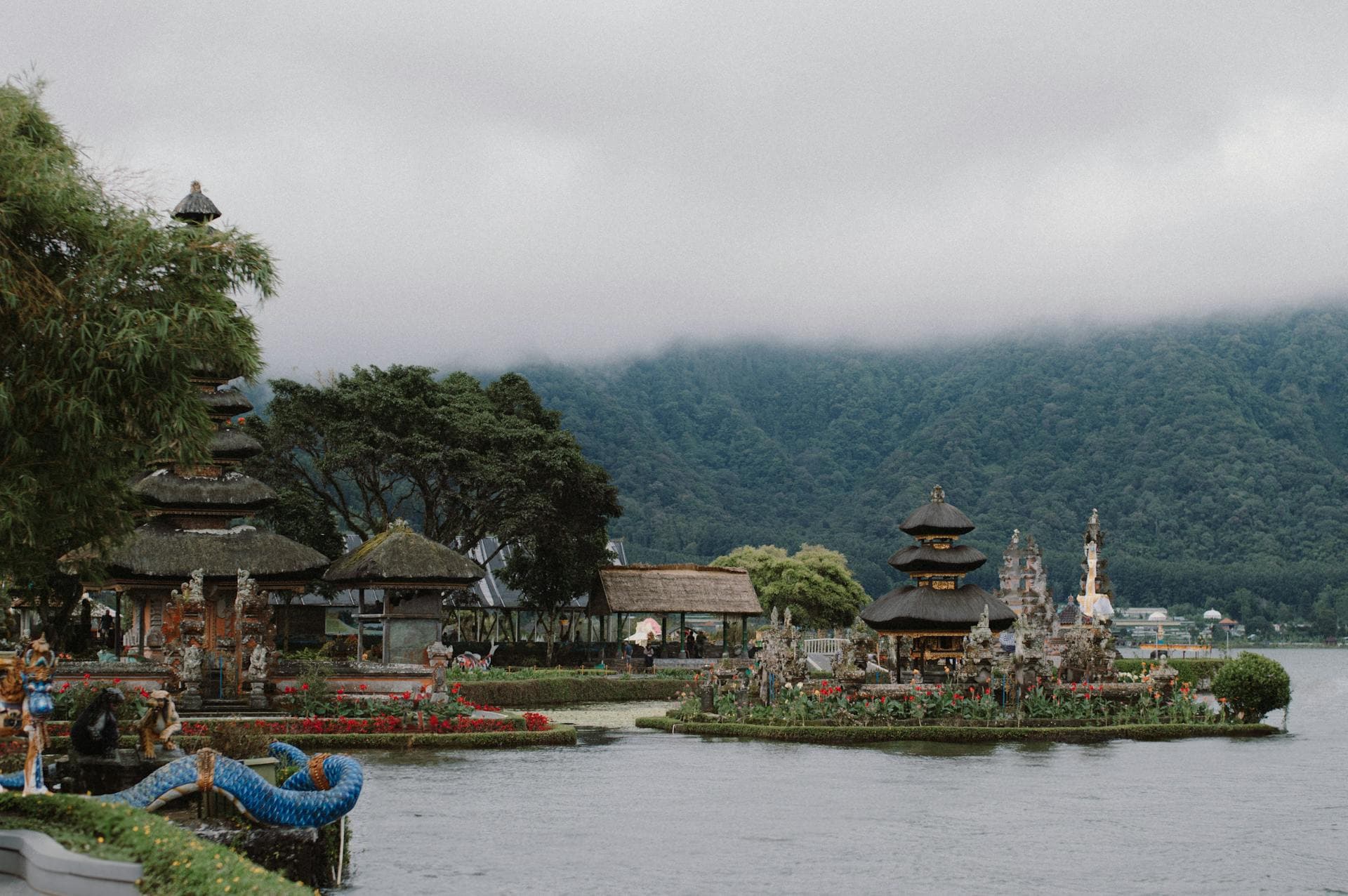
Bali
A Hindu-majority island with a surprisingly strong halal scene — and some of the world's most beautiful scenery.
Bali surprises most Muslim travellers. The island is majority Hindu; about 87% of Bali's local population follows Balinese Hinduism, but Indonesia as a whole is the world's largest Muslim-majority nation, and that national Muslim identity has a quiet but growing presence on the island. The result is a destination that requires more halal research than, say, Kuala Lumpur or Istanbul, but that rewards the effort with some of the most extraordinary natural and cultural scenery in Southeast Asia.
The terraced rice paddies of Tegallalang. The sea temple of Tanah Lot perched on a rock at sunset. The roaring volcano of Mount Batur at dawn. Bali's beauty is genuinely extraordinary and not exaggerated by the travel-brochure industry. What's less publicised is that the halal food scene has expanded significantly in the past decade, particularly in Seminyak, Canggu, Ubud, and Kuta, driven by the rapidly growing number of domestic Indonesian Muslim tourists visiting from Java and Sumatra, who are now the island's largest visitor demographic.
For Muslim travellers, Bali is absolutely manageable and deeply rewarding. The key is knowing where to find halal-certified food, where the mosques are, and understanding how to navigate a Hindu cultural environment respectfully. This guide will tell you all of that and convince you to book the trip.
Why Muslims Love This Destination
- Growing number of halal restaurants, Muslim-owned eateries, and prayer facilities in major tourist areas.
- Stunning natural beauty, including beaches, rice terraces, waterfalls, and volcanic landscapes.
- Family-friendly resorts and private villas that offer comfort and privacy for Muslim travelers.
- Warm hospitality and a welcoming atmosphere for visitors from around the world.
- Easy access to nearby Muslim-friendly areas such as Lombok for extended travel experiences.
Advertisement Space
destination-content • banner • Min: 320pxHalal food in Bali is widely available but requires the right knowledge of where to look. The MUI (Majelis Ulama Indonesia) halal certification is the national standard. Look for the green MUI logo on restaurant windows and menus. Beyond certified restaurants, the island's abundant seafood is halal by default for all schools of thought, and Balinese vegetable-based dishes are generally halal (though check for alcohol in marinades at upscale restaurants).
Best areas for halal food:
Seminyak and Kuta have the highest concentration of halal-certified restaurants, driven by high visitor footfall from Muslim-majority Indonesian provinces. The Legian Street area in Kuta has multiple halal warungs (small local restaurants) serving nasi goreng, mie goreng, satay, and grilled seafood. In Ubud, the Ubud Market area and Monkey Forest Road have several halal-certified options.
Specific must-try halal spots and dishes:
• Nasi campur Bali (halal version): mixed rice with various side dishes. Order at any warung displaying MUI certification. The combination of rice, sautéed vegetables, tofu, tempeh, and sambal is quintessentially Balinese.
• Sate lilit: Balinese minced fish or chicken satay wrapped around lemongrass sticks, fragrant with galangal and coconut. Available at halal warungs throughout the island.
• Nasi goreng and mie goreng: Indonesian fried rice and fried noodles, universally available at halal warungs. Reliable, filling, and cheap (IDR 20,000–40,000).
• Grilled seafood on Jimbaran Bay: Jimbaran's beach restaurants are famous for fresh-caught fish and shellfish grilled over coconut husk. Multiple halal-certified options exist along Jimbaran Beach — look for the MUI sign. This is one of Bali's great dining experiences: feet in the sand, sunset over the Indian Ocean, fresh grilled snapper.
• Bebek betutu (halal version): slow-roasted duck in Balinese spice paste. Available at halal-certified restaurants in Ubud and Seminyak; confirm halal status before ordering.
Apps and tools: HalalTrip and Zomato (filter by halal) both have good Bali-specific databases. The Muslim Pro app's restaurant finder also covers Bali increasingly well. When in doubt, ask "Apakah ini halal?" (Is this halal?) Most Balinese restaurant staff understand the question from their Muslim domestic visitors.
While Bali's temple-dominated skyline reflects its Hindu heritage, the island has a significant Muslim community (approximately 13% of the population) concentrated in Denpasar, Singaraja, and Lovina in the north. Prayer facilities exist throughout the island.
• Masjid Agung Sudirman (Denpasar) — the largest and most central mosque in Bali, located in the Denpasar city centre. A reliable landmark for Friday prayers and daily salah. Well-maintained with wudu facilities and a women's prayer section.
• Masjid Al-Muttaqin (Kuta) — well-located mosque in the tourist-heavy Kuta area, making it convenient for visitors staying in Seminyak or Kuta.
• Masjid Ukhuwah (Seminyak) — serves the Muslim community in the Seminyak area. Small but functional.
• Ngurah Rai International Airport — prayer rooms are available in both the domestic and international terminals. Ask any airport staff for the "ruang sholat" (prayer room).
• Major shopping centres — Discovery Shopping Mall (Kuta), Beachwalk Shopping Centre (Kuta), and Bali Collection (Nusa Dua) all have musholla (prayer rooms) with wudu facilities. These are particularly useful for travellers in tourist areas who need a prayer space between sightseeing.
Practical note on prayer in Bali: Balinese Hindu culture is deeply respectful of all religious practice. You will encounter no hostility praying publicly in Bali. However, be mindful near active Hindu temples and ceremonies — maintain a respectful distance and do not interrupt processions. The coexistence of faiths in Bali is genuinely harmonious.
Muslim Travel Tips
- Use apps such as HalalTrip, Muslim Pro, or Google Maps to locate halal restaurants and nearby prayer facilities.
- Plan prayer times in advance, especially when visiting remote beaches or nature attractions.
- Look for halal-certified restaurants or seafood and vegetarian options when halal certification is unavailable.
- Dress modestly when visiting temples, religious sites, and traditional villages.
- Consider hiring a private driver for convenient transportation between attractions spread across the island.
Best months: April to October (dry season). Bali's dry season runs from April through October, with July and August being peak months for visitors. The weather is reliably sunny (28–32°C), humidity is lower, and beach conditions are excellent. April to June and September to October offer the ideal balance: dry season conditions without the full July–August peak crowds and prices.
Shoulder season: November and March are transitional months with some rain but still largely manageable. Prices are lower, and crowd levels are comfortable.
Wet season: November to March. Bali's wet season brings daily tropical rainfall (usually afternoon showers of 1–3 hours). The island stays green and beautiful, rice terraces are lush, and prices are significantly lower. Many Muslim travellers from the Gulf visit during December–January; despite the rain, the temperature is actually more comfortable than Bali's dry season peak. Outdoor temple visits and beach activities are less enjoyable during heavy rain periods.
Ramadan consideration: If you're visiting during Ramadan, Bali has manageable restaurants open for iftar, and the Muslim community observes the month fully. Tourists are generally respectful. Avoid eating publicly in front of fasting locals during daylight hours as a courtesy.
Plan Your Trip
Book Flights, Hotels & Activities
Everything you need to book your trip to Bali in one place.
Bali divides naturally into distinct regions, each with a different character and different levels of halal food access. Understanding this geography transforms how you plan.
South Bali (Kuta, Seminyak, Canggu, Jimbaran, Nusa Dua): The tourist heartland. Most international visitors stay here. Halal food options are highest in this region. Seminyak and Kuta have the most halal-certified restaurants. Nusa Dua is home to Bali's luxury resort corridor — most international hotel chains here will have halal food options on request. Jimbaran Bay for sunset seafood dinners is an unmissable Bali experience.
Ubud (Central Bali): The cultural and spiritual heart of Bali — rice terraces, traditional dance performances, the Sacred Monkey Forest, and the Ubud Palace. The restaurant scene in Ubud has several halal options, though fewer than South Bali. The Tegallalang Rice Terraces (20 minutes north of Ubud) and the Tirta Empul water temple are among the most photographed sites in Southeast Asia.
North and East Bali: Less touristy, more local. Mount Batur (volcano trekking at dawn), Lake Batur, and the water palace of Tirtagangga are in this region. The north coast (Lovina, Singaraja) has a more significant Muslim population and correspondingly better halal food access.
Temple etiquette for Muslim visitors: Bali's Hindu temples are extraordinary — the sea temple of Tanah Lot, the clifftop Uluwatu Temple, and the mother temple Besakih are world-class heritage sites. Muslim visitors are welcome to visit (outside active prayer ceremonies). A sarong must be worn around the waist when entering temple grounds — these are usually provided or available for rental at the entrance for IDR 10,000–20,000. There is no requirement to participate in Hindu religious practices.
Transport: Bali does not have public transport beyond short-range bemos (minibuses). For getting around, hire a driver for the day (IDR 400,000–600,000 for an 8-hour day with car) — this is the standard and most practical option. Grab (Southeast Asia's Uber equivalent) operates in South Bali and Ubud and is excellent for shorter trips.
Advertisement Space
destination-sidebar • rectangle • Min: 300pxCountry
Indonesia
Visa Requirements
Visa on arrival (30 days, USD 35) or e-Visa available
Currency
Indonesian Rupiah (IDR)
Time Zone
Central Indonesia Time (WITA), UTC+8
Muslim Population
Approximately 4.5 million residents ~87% world's largest Muslim-majority nation
Main Language
Indonesian (Bahasa), Balinese; English widely spoken in tourist areas
Dress Code
MODEST DRESS: Normal
Safety Level
High – Bali is generally considered safe for tourists. Standard travel precautions are recommended, particularly regarding traffic safety and safeguarding personal belongings in busy tourist areas.
✈️ Search Flights to Bali
Compare 100+ airlines
Powered by Aviasales via Travelpayouts
🏨 Hotels in Bali
Compare 2M+ hotels worldwide
Powered by Hotellook via Travelpayouts
Prayer Times
Loading timings...
Explore More Destinations
Discover other Muslim-friendly destinations around the world.
View All Destinations