
Baku
Baku is one of the most surprising capitals in the world. Sitting on the western shore of the Caspian Sea, Azerbaijan's capital combines a UNESCO-listed medieval Islamic old city with a skyline of futuristic towers, a sophisticated restaurant scene, and a cultural energy that feels genuinely different from anywhere else in the region. For Muslim travellers, Baku offers something increasingly rare: a Muslim-majority European city where halal food is the cultural default, mosques are part of the urban fabric, and Islamic heritage is woven into the architecture and daily life of a modern, cosmopolitan capital.
Azerbaijan is approximately 96% Muslim and has been so for over a thousand years. The Soviet period suppressed open religious practice for seven decades, and what has emerged since independence in 1991 is a society that is Muslim in identity and culture while remaining secular in governance. This creates a specific character in Baku that is unlike any Gulf city or Southeast Asian Muslim destination — it is European in feel, Caucasian in geography, Turkic in language, and Islamic in heritage.
The city divides naturally into two contrasting experiences. The Icherisheher, or Inner City, is Baku's walled medieval quarter and a UNESCO World Heritage Site. The 12th-century Maiden Tower, the Palace of the Shirvanshahs, the ancient caravanserais, and the narrow lanes of the old city create an atmosphere of deep Islamic history. Walking through Icherisheher in the early morning, before the tourist crowds arrive, is one of the great experiences available to a Muslim traveller in the Caucasus region.
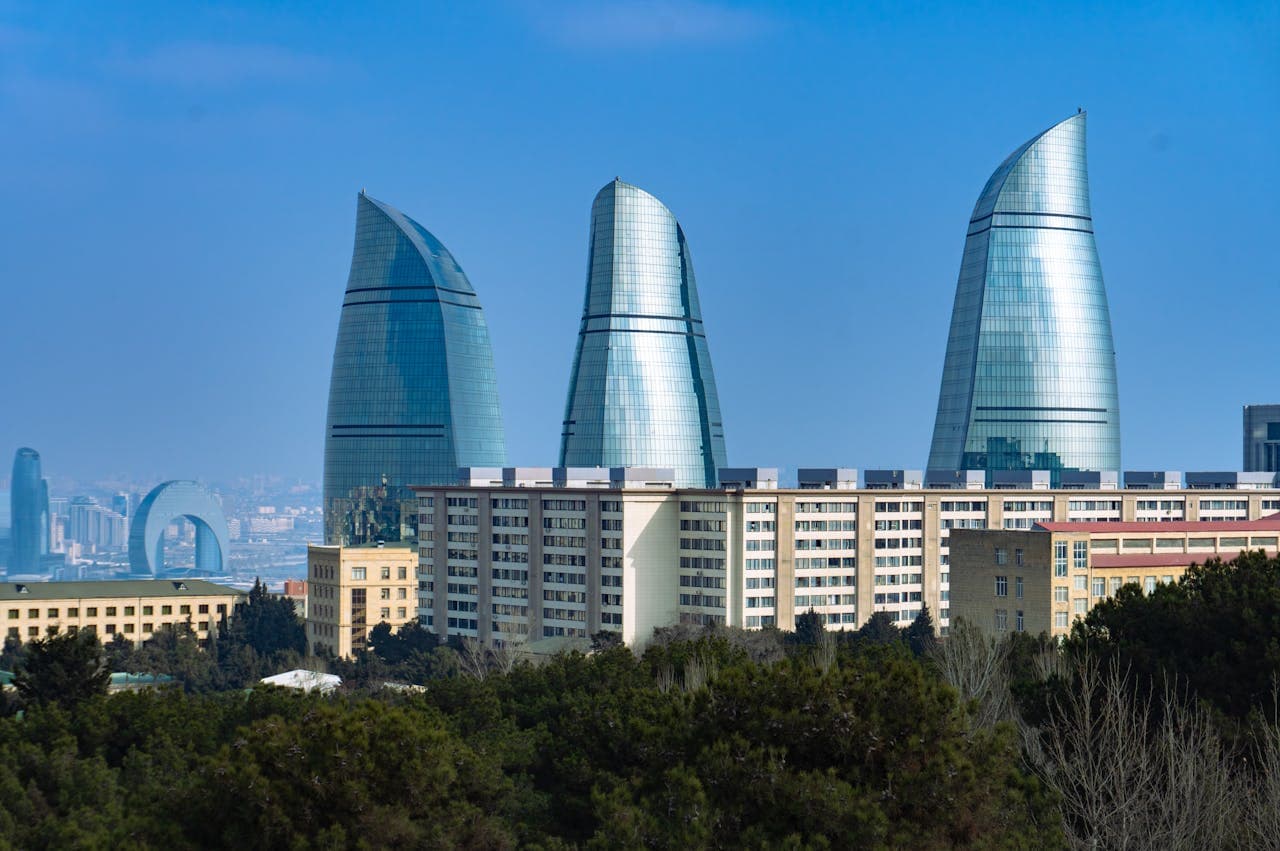
Directly beside the old city, modern Baku rises dramatically. The Flame Towers — three skyscrapers clad in LED panels that simulate fire and are visible from across the city — have become Baku's international symbol. The Heydar Aliyev Centre, designed by Zaha Hadid in flowing white curves, is one of the most architecturally significant buildings completed in the past twenty years. The Baku Boulevard along the Caspian seafront is one of the great urban promenades in the region.
For Muslim travellers, Baku rewards those who go beyond the obvious landmarks. The Teze Bazaar is one of the great food markets of the Caucasus, with saffron, pomegranate, dried fruits, spices, and fresh produce that reflect Azerbaijan's extraordinary culinary tradition. The Bibi-Heybat Mosque complex south of the city is one of the most important Shia pilgrimage sites in the Caucasus and is extraordinarily atmospheric. And the day trip to Shahdag Mountain — a high-altitude resort area of dramatic Caucasus scenery — is one of the great hidden experiences in Muslim travel right now.
Why Muslims Love This Destination
- Azerbaijan is 96% Muslim — halal food is the cultural default throughout the country with no research or verification needed.
- The UNESCO-listed Icherisheher old city contains one of the most intact medieval Islamic urban environments in the Caucasus region.
- Extraordinary Azerbaijani cuisine — plov, lavangi, dushbara — that is entirely halal and unlike anything available in most other travel destinations.
- A genuinely Muslim-majority European capital that feels different from both Gulf cities and Southeast Asian destinations — a rare travel experience.
- Easy access to Shahdag Mountain for dramatic Caucasus scenery, skiing in winter, and hiking in summer — all within a Muslim-majority cultural context.
Advertisement Space
destination-content • banner • Min: 320pxHalal food in Baku is the cultural default. Azerbaijan is 96% Muslim and halal slaughter is standard practice throughout the country. You do not need to search for certification or ask questions in mainstream Baku restaurants — the food is halal by cultural norm.
Azerbaijani cuisine is genuinely extraordinary and deeply underrated on the international stage. Plov is the centrepiece — saffron-infused rice cooked in a cauldron with dried fruits, chestnuts, and tender lamb, served with crisp tahdig (the golden rice crust from the bottom of the pot). Lavangi is chicken or fish stuffed with a paste of walnuts, herbs, and dried fruits, then slow-roasted. Levengi — similar but with duck. Dushbara is tiny lamb-filled dumplings in a sour broth. Shah plov is plov cooked inside a pastry casing and brought to the table whole.
For the full Azerbaijani food experience, visit the Teze Bazaar in the morning and eat at a family-run restaurant near the old city in the evening. Avoid the tourist-facing restaurants immediately adjacent to the Flame Towers — they charge significantly more for the same quality. The best Azerbaijani cooking is found in the mid-range restaurants frequented by local families.
Baku has mosques throughout the city, though the density is lower than in Turkey or Malaysia given Azerbaijan's Soviet legacy of suppressed religious practice. The most important mosques are the Bibi-Heybat Mosque (a beautiful Shia mosque south of the city centre, rebuilt after Soviet destruction on the site of a medieval original), the Juma Mosque in the Icherisheher old city (the oldest mosque in Baku), and the Lezghin Mosque also within the old city walls.
The Taza Pir Mosque on Azadliq Avenue is one of the more prominent mosques in the modern city centre and is accessible for visitors. Prayer rooms are available in Baku's international shopping malls. The Heydar Aliyev International Airport has prayer facilities in both the domestic and international terminals.
Download Muslim Pro before travelling to Baku — it provides accurate prayer times and mosque locations. Note that Azerbaijan follows a predominantly Shia tradition of Islam, which affects some prayer practices and the timing of certain religious observances. Both Shia and Sunni mosques are present in the city.
Muslim Travel Tips
- Azerbaijan requires a visa for most nationalities. The e-Visa system (evisa.gov.az) is straightforward and processes quickly — apply at least a week before travel.
- The Azerbaijani Manat (AZN) is the currency. Cash is widely used and ATMs are readily available throughout Baku. Card acceptance is improving rapidly but carry local cash for markets and smaller restaurants.
- Yandex Taxi is the standard ride-hailing app in Baku and works reliably throughout the city. Prices are very low by European standards.
- The Baku Metro covers central areas and is cheap and efficient. Stations require a BakiKart (rechargeable card) available at any station.
- Download offline Google Maps for Baku before arriving — WiFi can be inconsistent in the old city lanes.
- English is not widely spoken outside of hotels and major attractions. Russian or Azerbaijani is more useful — Google Translate with the camera function handles menus and signs effectively.
- Dress modestly when visiting mosques. Women should cover hair and shoulders. Both the Bibi-Heybat and Juma mosques welcome respectful visitors.
Spring (April to June) and autumn (September to October) are the best times to visit Baku. Spring brings mild temperatures of 15 to 22 degrees Celsius, the city's parks in bloom, and comfortable conditions for walking the old city and the Boulevard. Autumn has similar temperatures with a golden quality to the light that makes Baku particularly photogenic.
Summer (July to August) is hot — temperatures reach 38 to 40 degrees Celsius — and can be uncomfortable for extensive outdoor sightseeing. The Caspian Sea is warm enough for swimming but beach facilities are limited compared to Mediterranean destinations.
Winter (December to February) is cold, with temperatures dropping to near freezing in Baku and well below freezing at altitude. However, winter is the ski season at Shahdag Mountain Resort, making it an excellent time to combine city exploration with mountain activities.
Plan Your Trip
Book Flights, Hotels & Activities
Everything you need to book your trip to Baku in one place.
Baku blends Islamic heritage with oil-rich modernity. The historic walled city contains old mosques and bazaars, while the modern boulevard hosts malls with prayer rooms. The city often holds cultural festivals and markets during Ramadan and other holidays, and halal dining is standard, making it easy for Muslim tourists to experience local culture.
Advertisement Space
destination-sidebar • rectangle • Min: 300pxCountry
Azerbaijan
Visa Requirements
e-Visa required for most nationalities — apply at evisa.gov.az
Currency
Azerbaijani Manat (AZN)
Time Zone
Azerbaijan Time (AZT), UTC+4
Muslim Population
~96%
Main Language
Azerbaijani; Russian widely spoken
Dress Code
MODEST DRESS: Respected and widely practised, especially near mosques
Safety Level
Generally safe for tourists. Standard precautions against petty theft in crowded areas.
✈️ Search Flights to Baku
Compare 100+ airlines
Powered by Aviasales via Travelpayouts
🏨 Hotels in Baku
Compare 2M+ hotels worldwide
Powered by Hotellook via Travelpayouts
Prayer Times
Loading timings...
Explore More Destinations
Discover other Muslim-friendly destinations around the world.
View All Destinations